



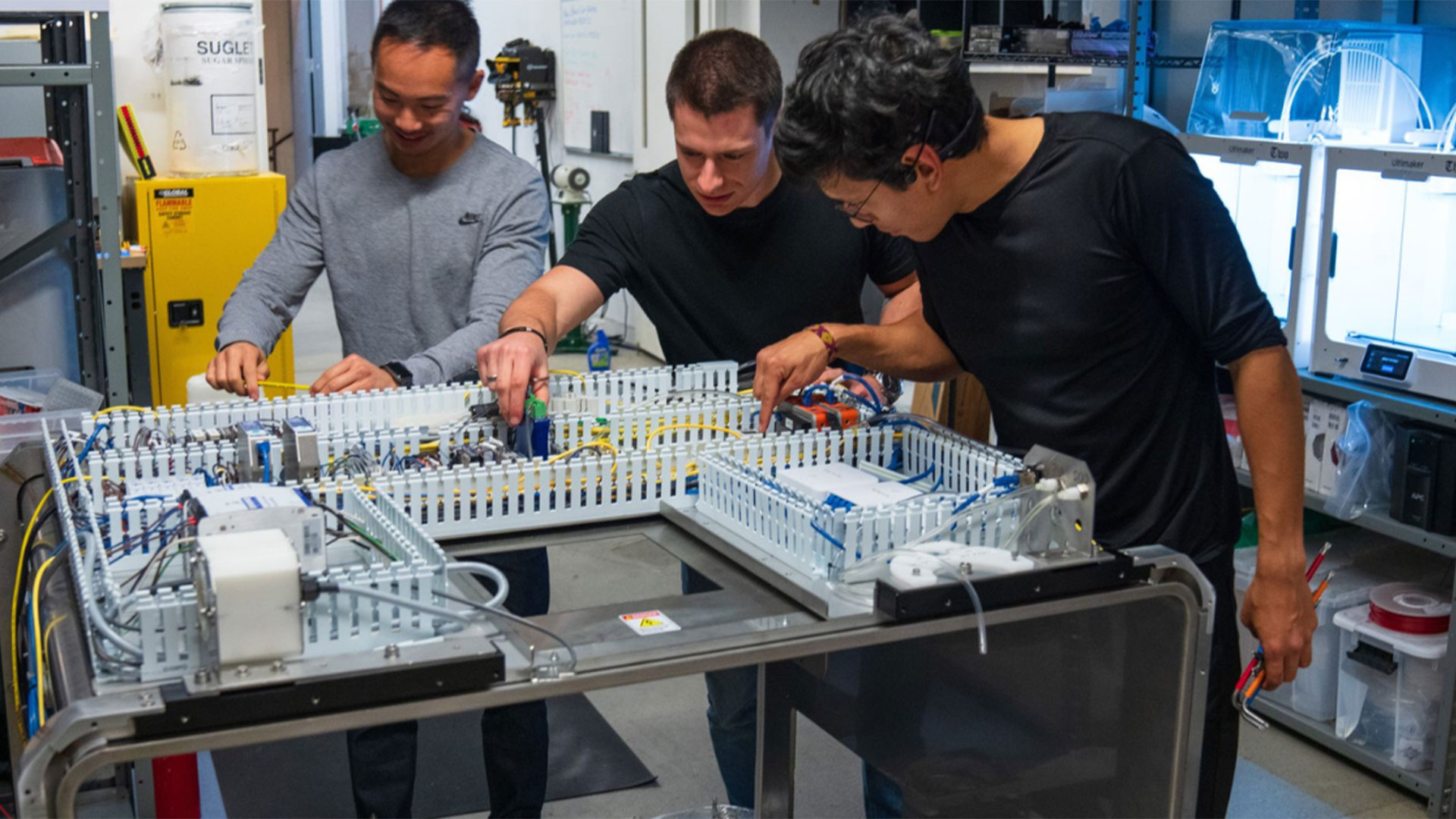
Turning a Technical Question into a Validated Solution
In December 2025, Multiply Labs visited Fedegari’s Technology Center in Sellersville, Pennsylvania for live testing and process evaluation, marking an important milestone in the growing collaboration between the two teams.
While the broader partnership centers on automating and industrializing cell and gene therapy manufacturing, this visit focused on a specific and critical technical question: How do you properly sterilize sensitive robotic components without compromising their functionality?
A Targeted Sterilization Challenge
As Multiply Labs continues developing its modular automation system for cell and gene therapy, certain robotic connectors must be sterilized before entering the controlled process environment.
The complexity lies in the materials. Many of these components are made from polycarbonate and various plastic materials that can degrade under excessive heat. In this context, sterilization parameters cannot simply be assumed.
The team needed to determine:
- The appropriate sterilization method
- The temperature thresholds the materials could tolerate
- How to ensure sterility without affecting mechanical integrity
Rather than relying on theory, real components were brought to the Technology Center for hands-on evaluation.
From Evaluation to Validation
Over the course of a single day, Fedegari’s technical specialists worked alongside the Multiply Labs team to conduct live testing within the Tech Center.
The session included:
- Dry heat and steam sterilization trials
- Multiple temperature profile evaluations
- Post-cycle material inspections
- Identification of an optimal sterilization parameter range
The objective was not simply to sterilize the parts. It was to assess a defined and controlled temperature range under GMP aligned conditions, evaluating whether sterility assurance could be achieved without compromising functional performance of the robotic components
By the end of the visit, the teams had defined a viable sterilization pathway supported by real test data.
The Role of the Technology Center
The December visit underscores the purpose of Fedegari’s Technology Center as more than a demonstration space. It is a fully operational environment designed for live equipment testing, process development, and direct collaboration.
Rather than discussing theoretical parameters, customers and partners can simulate real production conditions, evaluate materials under validated process cycles, and work alongside sterilization specialists to refine performance in real time. The ability to test, adjust, and confirm results on-site significantly shortens development timelines and reduces uncertainty.
For fast-evolving areas like cell and gene therapy, where precision, reliability, and speed are critical, hands-on validation becomes a strategic advantage.
From Testing to Deployment
Following successful testing and evaluation of the sterilization parameters, Multiply Labs moved forward with the purchase of a Fedegari autoclave for installation at its San Francisco facility.
This allows their team to:
- Conduct ongoing material testing
- Validate new component iterations independently
- Refine sterilization processes as their automation platform evolves
Fedegari remains actively involved, providing technical guidance, training, and validation expertise as needed.
A Moment Within a Larger Innovation Journey
While the December visit represents a single milestone, it reflects a broader shift in how advanced therapies are being developed and industrialized.
Multiply Labs brings deep expertise in automation and modular system design. Fedegari brings decades of experience in sterilization, GMP compliance, and pharmaceutical manufacturing requirements. Together, that combination allows innovation to move forward with both speed and regulatory confidence.
As cell and gene therapies transition toward scalable industrial models, solutions must do more than automate processes. They must ensure stability, repeatability, and validated performance at every step.
In this case, progress was not theoretical. It was defined through testing, data, and collaboration inside the Technology Center, where ideas are translated into defined, evaluated and controlled process parameters which leads to the validation of a program.